
Forex Trading for Beginners: 10 Essential Tips to Kickstart Your Trading Journey
What is Forex Trading ?
Why it's important to have a solid foundation before diving into trading
Having a solid foundation before diving into trading is crucial for several reasons. First and foremost, trading involves real money and carries inherent risks. Without a proper understanding of the market dynamics, strategies, and risk management techniques, you can quickly incur substantial losses.
A solid foundation provides you with the knowledge and skills necessary to navigate the complexities of trading. It helps you understand fundamental and technical analysis, interpret market indicators, and make informed trading decisions. Additionally, having a clear grasp of risk management techniques allows you to protect your capital and minimize potential losses.
Moreover, building a foundation helps you develop discipline, patience, and emotional control. Trading can be highly stressful, and having the right mindset is crucial to avoid impulsive and irrational decisions.
Overall, a solid foundation in trading equips you with the tools and mindset needed to navigate the markets effectively and increases your chances of long-term success.
Tip 1: Understand the basic of Forex trading
Tip 2: Choose Reliable Forex Broker
Choosing a reputable broker is crucial because it ensures the security of your funds, provides access to reliable trading platforms, offers competitive spreads and fees, and ensures fair trading practices. A reputable broker helps create a trustworthy and transparent trading environment for traders.
When selecting the right broker for your needs, consider the following tips:
1. Regulation and Safety: Choose a broker regulated by reputable financial authorities to ensure the safety of your funds. Check if they have proper licenses and a track record of regulatory compliance.
2. Trading Platform: Evaluate the trading platforms offered by brokers. Ensure they are user-friendly, stable, and equipped with essential features and tools for analysis and execution.
3. Range of Instruments: Consider the variety of financial instruments offered by the broker. Ensure they provide access to the currency pairs and other assets you intend to trade.
4. Transaction Costs: Compare the spreads, commissions, and fees charged by different brokers. Lower transaction costs can significantly impact your profitability over time.
5. Customer Support: Assess the quality and availability of customer support services. Look for brokers that offer prompt and helpful assistance in case of issues or queries.
6. Account Types and Minimum Deposits: Check if the broker offers account types that suit your trading style and financial capabilities. Consider the minimum deposit required and account features provided.
7. Educational Resources: Look for brokers that offer educational materials, webinars, or demo accounts to help beginners learn and practice trading.
Remember to conduct thorough research, read reviews, and consider recommendations from experienced traders. Selecting the right broker tailored to your needs can greatly enhance your trading experience.
Tip 3: Develop a Trading Plan:

1. Set Clear Goals: Define your trading goals, whether it's generating consistent income, building long-term wealth, or learning and improving your skills. Having specific and realistic goals will help guide your trading plan.
2. Define Risk Tolerance: Determine the amount of risk you're comfortable taking on each trade. Set a maximum risk percentage per trade or account balance to protect your capital. This ensures you don't expose yourself to excessive risk and helps manage potential losses.
3. Develop Entry and Exit Strategies: Create clear criteria for entering trades based on technical or fundamental analysis. Define specific indicators, price levels, or patterns that align with your trading strategy. Likewise, establish exit strategies to take profits or cut losses based on predetermined conditions.
4. Money Management: Determine the position size or lot size for each trade based on your risk tolerance and account balance. Consider setting stop-loss orders to limit potential losses and take-profit orders to secure profits. Implementing proper money management techniques is crucial for long-term success.
5. Regularly Review and Update: Review your trading plan periodically and make necessary adjustments. Monitor your trading performance, identify areas for improvement, and adapt your plan as needed. The trading plan should be a flexible document that evolves with your experience and changing market conditions.
Tip 4: Start with a Demo Account
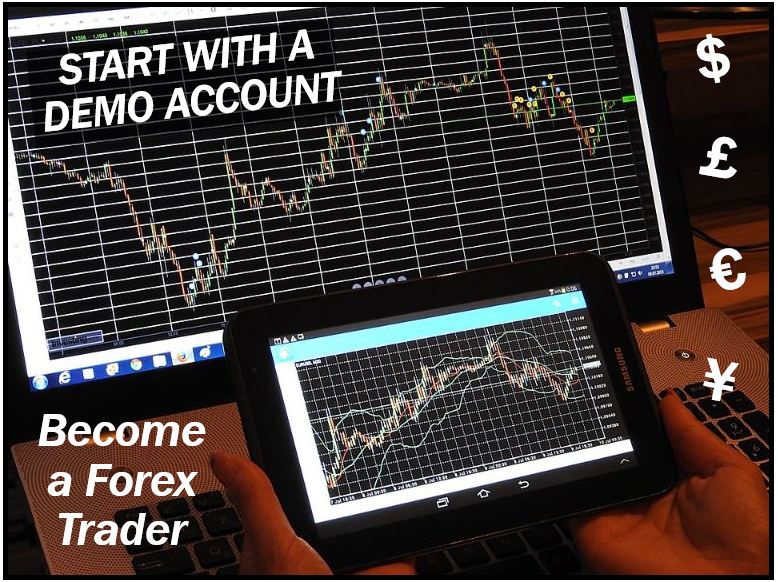
1. Treat it as a Real Account: Approach your demo account with the same seriousness and discipline as you would with a live account. Follow your trading plan, manage risks, and make decisions based on careful analysis.
2. Experiment with Strategies: Utilize the demo account to test different trading strategies and techniques. Explore various indicators, timeframes, and entry/exit points to find what works best for you. This experimentation can help you discover a strategy that suits your trading style.
3. Track and Analyze Performance: Keep a record of your trades and analyze the outcomes. Evaluate your win/loss ratio, risk-reward ratios, and overall performance. This data will help you identify strengths, weaknesses, and areas for improvement.
4. Embrace Realistic Conditions: Simulate real trading conditions by using the same capital and risk management rules you plan to employ in live trading. Consider factors like slippage, spreads, and execution speed to understand how they impact your trading results.
5. Control Emotions: Treat losses and gains in the demo account with emotional detachment. Use the opportunity to practice emotional control and develop a disciplined mindset that will benefit you when trading with real money.
Remember, the primary purpose of a demo account is to learn and refine your trading skills. Make the most of it by utilizing effective strategies, tracking performance, and gaining experience without the pressure of financial risk.
Tip 5: Learn from a Successful Trader
Learning from others' experiences is important because it allows you to gain insights, avoid common pitfalls, and accelerate your learning curve. By studying the experiences of successful traders, you can understand their strategies, risk management techniques, and decision-making processes. Similarly, learning from the mistakes and challenges faced by others helps you avoid costly errors. Leveraging the knowledge and wisdom of experienced traders can provide valuable guidance, expand your perspective, and increase your chances of success in the financial markets.
When looking to find and follow successful traders, consider the following tips:
1. Research and Networking: Engage in online research, join trading forums, and participate in social media groups related to trading. Network with other traders and seek recommendations for successful traders to follow.
2. Track Records and Performance: Look for traders with a proven track record of consistent profitability. Evaluate their past performance, including their win/loss ratios, risk management strategies, and overall trading approach. Use reputable platforms that provide transparent performance data.
3. Follow Reputable Platforms: Explore reputable social trading platforms that allow you to follow and copy trades of successful traders. These platforms often provide detailed information about traders' performance, risk profiles, and trading strategies.
4. Analyze Trading Style and Approach: Assess if the trading style and approach of successful traders align with your goals and risk tolerance. Consider factors such as timeframes, instruments traded, technical or fundamental analysis techniques, and overall trading philosophy.
5. Learn from Their Insights: Follow successful traders who share their insights, market analysis, and trading strategies. This can provide valuable educational material and help you understand their decision-making process.
6. Risk Management: Prioritize traders who emphasize risk management and capital preservation. Successful traders understand the importance of managing risk and have strategies in place to protect their capital.
Remember, while following successful traders can be beneficial, it's essential to develop your own understanding, conduct due diligence, and adapt their strategies to suit your individual needs and circumstances.
Tip 6: Keep a Trading Journal
Keeping a trading journal is important because it allows you to track and analyze your trading activities, record your thoughts and decisions, and review your performance over time. It helps you identify patterns, strengths, and weaknesses in your trading approach, enabling you to make informed adjustments and continuously improve your trading strategy and discipline.
Here are some tips for maintaining a trading journal:
1. Consistency: Make it a habit to record your trades consistently. Note down the entry and exit points, position size, reasons for taking the trade, and any relevant market conditions.
2. Include Thoughts and Emotions: Capture your thoughts, emotions, and observations during the trade. Reflect on how you felt and how it may have influenced your decision-making.
3. Review and Analyze: Set aside regular time to review your trading journal. Analyze your trades, identify patterns, strengths, and weaknesses. Look for areas of improvement and adjust your trading plan accordingly.
4. Learn from Mistakes: Document and analyze your losing trades. Pinpoint the reasons for the losses, whether it was a mistake in analysis or execution. Learn from these mistakes to avoid repeating them in the future.
5. Celebrate Successes: Acknowledge and document your successful trades. Review what went well and reinforce those positive aspects of your trading strategy.
6. Include Screenshots and Charts: Supplement your journal with relevant screenshots and charts. Visual representations can provide additional insights and help you better understand market movements and trade outcomes.
7. Stay Organized: Keep your journal organized and easily accessible. Use categories, tags, or a structured format to facilitate future analysis and retrieval of specific trades.
8. Set Goals: Use your trading journal to set specific goals and track your progress towards them. Monitor your performance metrics and work towards improving them over time.
Maintaining a trading journal is a personal process, so adapt it to suit your trading style and preferences. The key is to consistently record and analyze your trades to gain valuable insights for continuous improvement.
Tip 7: Manage your risk.
Risk management is vital in forex trading as it safeguards your trading capital, helps maintain consistency, and ensures long-term success. By implementing proper risk management techniques, such as setting stop-loss orders and managing position sizes, you protect yourself from excessive losses and maintain control over your trading activities. It helps you navigate the inherent uncertainties of the market, preserves your psychological well-being, and increases the overall sustainability of your trading endeavors.
Here are some tips for managing risk effectively in forex trading:
1. Set Risk Limits: Determine the maximum amount of risk you are willing to take per trade or as a percentage of your overall trading capital. Stick to these limits consistently.
2. Use Stop-Loss Orders: Always use stop-loss orders to automatically exit a trade if it moves against you. This helps limit potential losses and protects your capital.
3. Position Sizing: Calculate the appropriate position size for each trade based on your risk tolerance and stop-loss level. Avoid risking an excessive amount of capital on any single trade.
4. Diversify Your Trades: Spread your trades across different currency pairs and avoid overconcentration in one particular market or position. Diversification helps mitigate the impact of losses in a single trade.
5. Follow a Trading Plan: Develop a well-defined trading plan that includes risk management rules. Stick to your plan and avoid deviating from it based on emotions or impulsive decisions.
6. Regularly Review and Adjust: Continuously review your trading performance and risk management strategies. Identify any weaknesses or areas for improvement and make necessary adjustments to enhance your risk management approach.
7. Stay Informed: Stay updated on market news, economic indicators, and geopolitical events that may impact currency markets. Being aware of potential risks and market conditions can help you make more informed risk management decisions.
8. Control Leverage: Use leverage cautiously and understand its implications. Higher leverage amplifies both profits and losses, so manage leverage levels prudently to avoid excessive risk.
Remember, effective risk management is crucial for long-term success in forex trading. It helps protect your capital, control losses, and maintain a disciplined approach to trading.
Tip 8: Use Technical Analysis

1. Learn the Basics: Develop a solid understanding of technical analysis concepts, including chart patterns, trend lines, support and resistance levels, and technical indicators. Familiarize yourself with commonly used technical analysis tools and their interpretations.
2. Combine Multiple Indicators: Avoid relying solely on one indicator or signal. Instead, use a combination of indicators to validate your analysis and enhance the accuracy of your trading decisions. Look for convergence or confirmation between different indicators for stronger signals.
3. Use Multiple Timeframes: Analyze price charts across multiple timeframes to gain a broader perspective. Long-term trends can be assessed on higher timeframes, while entry and exit points can be identified on shorter timeframes.
4. Practice Risk Management: Apply risk management principles alongside technical analysis. Determine appropriate position sizes, set stop-loss orders, and consider risk-reward ratios for each trade. This helps protect your capital and manage potential losses.
5. Keep It Simple: Avoid overcomplicating your analysis with too many indicators or conflicting signals. Focus on a few key indicators or patterns that align with your trading strategy and have a proven track record of success.
6. Backtest and Validate: Test your technical analysis strategies on historical data to assess their effectiveness. Backtesting helps you understand how your analysis would have performed in the past, but remember that past performance does not guarantee future results.
7. Continuously Learn and Adapt:Stay updated with new developments in technical analysis and enhance your skills over time. Adapt your strategies as market conditions change and refine your approach based on your trading experiences.
8. Combine Technical and Fundamental Analysis: Incorporate fundamental analysis alongside technical analysis to gain a more comprehensive view of the market. Fundamental factors can influence price movements and provide additional insights for making trading decisions.
Remember, technical analysis is a tool that aids decision-making, but it should not be used in isolation. It is essential to consider other factors, such as market sentiment, economic news, and geopolitical events, to form a well-rounded trading strategy.
Tip 9: Stay Up to Date with Market News
Here are some tips for staying up-to-date with market news:
1. Follow Reliable News Sources: Subscribe to reputable financial news websites, such as Bloomberg, Reuters, Financial Times, or CNBC. These sources provide comprehensive coverage of global financial markets.
2. Use Economic Calendars: Utilize economic calendars that highlight upcoming economic data releases, central bank meetings, and other significant events. Websites like Forex Factory or Investing.com offer reliable economic calendars.
3. Set up News Alerts: Set up news alerts or notifications on your mobile devices or trading platforms to receive real-time updates on market-moving news. This helps you stay informed even when you are away from your computer.
4. Follow Social Media: Follow influential market commentators, economists, and financial institutions on social media platforms like Twitter or LinkedIn. They often share valuable insights and timely updates on market developments.
5. Join Trading Communities: Engage in trading communities, forums, or online groups where traders share market analysis, news, and insights. Participating in these communities can help you stay informed and learn from others.
6. Watch Financial TV Channels: Tune in to financial TV channels like CNBC, Bloomberg TV, or other local equivalents. They provide live coverage of market news, interviews with experts, and analysis of market trends.
7. Read Market Analysis Reports: Access market analysis reports from reputable financial institutions or research firms. These reports offer in-depth analysis, forecasts, and insights into market trends and potential trading opportunities.
8. Stay Informed on Social, Political, and Geopolitical Developments: Keep an eye on social, political, and geopolitical news that can impact financial markets. Developments such as elections, trade disputes, or geopolitical tensions can have significant implications for currency movements.
Remember to focus on reliable sources and filter out noise or biased information. Consistently staying updated with market news helps you make more informed trading decisions and adapt your strategies to changing market conditions.
Tip 10: Be Patient and Disciplined

Patience and discipline are crucial in forex trading for several reasons. Patience allows you to wait for high-probability trade setups and avoid impulsive, emotional decisions. Discipline helps you stick to your trading plan, follow risk management strategies, and avoid chasing losses. By practicing patience and discipline, you can maintain a consistent and methodical approach to trading, which increases the likelihood of long-term success and helps navigate the inevitable ups and downs of the market with a clear and focused mindset.
Developing patience and discipline in forex trading can be challenging, but it is essential for success. Here are some tips to help you cultivate these qualities:
1. Define Your Trading Plan: Create a well-defined trading plan that outlines your trading strategy, risk management rules, and goals. This provides a structured framework that guides your decision-making and reduces impulsive behavior.
2. Stick to Your Plan: Once you have a trading plan in place, discipline yourself to follow it consistently. Avoid deviating from your plan based on emotions or short-term market fluctuations. Trust in the process and remain committed to your strategy.
3. Practice Mindfulness: Develop self-awareness and observe your thoughts and emotions while trading. Notice any impulses or impatience that arise and consciously choose to act in alignment with your trading plan instead of giving in to impulsive urges.
4. Embrace Patience as a Virtue: Understand that patience is a virtue in trading. Wait for high-quality trade setups that align with your strategy, rather than forcing trades out of boredom or fear of missing out. Accept that not every market condition is ideal for trading.
5. Manage Expectations: Set realistic expectations about the market and the time it takes for trades to play out. Understand that forex trading is a long-term endeavor, and success is built over time through consistent and disciplined actions.
6. Maintain a Trading Journal: Keep a trading journal to track your trades, emotions, and decision-making process. Reviewing past trades can provide insights into areas where patience or discipline may need improvement.
7. Surround Yourself with Support: Connect with like-minded traders or join trading communities where you can share experiences and gain support. Engaging with others who share similar goals can help reinforce discipline and patience.
8. Practice Patience in Daily Life: Cultivate patience in your everyday life. By developing patience in other areas, such as managing time, relationships, or personal goals, you can strengthen your ability to exercise patience in trading as well.
Remember, developing patience and discipline is an ongoing process. It requires self-awareness, commitment, and consistent practice. Stay focused, stay disciplined, and trust in your trading plan to navigate the markets successfully.
Conclusion :
Embark on your forex trading journey with confidence! Acquire knowledge, practice patience, and develop discipline. Start with a solid foundation, choose a reputable broker, and create a trading plan. Utilize demo accounts, learn from others' experiences, and maintain a trading journal. Stay informed, adapt, and embrace the challenges. Believe in your abilities and strive for continuous improvement. With dedication and a positive mindset, you can navigate the forex market with confidence and unlock your potential for success. Begin your journey today and embrace the exciting opportunities that forex trading has to offer!
No comments
Post a Comment